


Disclosure This page carries advertising. We do not accept payment for coverage, and adverts are selected by the ad network rather than by us.
On this page11 sections
The Quantum Channel Coding Theorem establishes principles for transmitting quantum information efficiently. It adapts Shannon's theory to quantum domains, determining channel capacity for qubits. Specialized coding techniques and error-correcting codes optimize quantum networks. Noise in channels poses challenges, requiring error detection and correction strategies. Minimizing errors improves robustness, essential in noisy quantum environments. Quantum Key Distribution and Entanglement-Based Protocols guarantee secure transmissions.
Key Takeaways
- Quantum channel coding theorem establishes capacity limits for quantum channels.
- The theorem quantifies maximum rate of reliable quantum info transmission.
- It determines optimal coding schemes for efficient quantum communication.
- Quantum error-correcting codes crucial for achieving channel capacity.
- The theorem guides design of quantum coding techniques for noise-resilient communication.
Theoretical Foundations
The Theoretical Foundations of quantum channel coding theory provide the fundamental framework for understanding the transmission of quantum information through noisy communication channels.
At the heart of quantum channel coding theory lies the adaptation of classical Shannon theory to the quantum domain, allowing for the development of strategies to safeguard quantum information from the detrimental effects of noise in quantum networks.
In Shannon theory, information is quantified in relation to classical bits, enabling the determination of the channel capacity and the establishment of coding schemes to guarantee reliable communication. Quantum channel coding theory extends these concepts to quantum bits or qubits, recognizing that quantum information is inherently different from classical information due to principles such as superposition and entanglement.
Quantum networks, which consist of interconnected quantum systems capable of transmitting quantum information, present unique challenges that necessitate specialized coding techniques to combat errors introduced by the channels.
By employing quantum error-correcting codes and quantum entanglement-based schemes, it becomes possible to protect quantum information from decoherence and other forms of noise that may corrupt the transmitted data.
In essence, the Theoretical Foundations of quantum channel coding theory serve as the theoretical underpinning for the design and analysis of communication protocols in quantum networks, ensuring the reliable transmission of quantum information in the presence of noise.
Quantum Information Transmission
Within quantum communication systems, the transmission of quantum information is a process characterized by the manipulation and transfer of quantum states across designated channels. Quantum information can be encoded in various quantum systems like photons or ions, and the information needs to be reliably transmitted from a sender to a receiver through quantum channels.
In quantum communication, ensuring the integrity of transmitted quantum information is essential. Quantum error detection techniques play an important role in identifying and correcting errors that may occur during transmission. By employing error-detecting codes, it is possible to detect errors without directly measuring the quantum states, thereby preserving the information encoded in them.
One fundamental concept in quantum information transmission is the quantum channel capacity, which is the maximum rate at which quantum information can be reliably transmitted through a quantum channel. It quantifies the amount of quantum information that can be sent without errors per channel used. Maximizing the quantum channel capacity is a significant goal in quantum communication protocols to achieve efficient and secure transmission of quantum data.
The table below provides a concise overview of key concepts in quantum information transmission:
| Concept | Description | Importance |
|---|---|---|
| Quantum Information | Encoded in quantum systems for transmission | Fundamental in quantum comm. |
| Quantum Error Detection | Identifying and correcting errors | Ensuring data integrity |
| Quantum Channel Capacity | Maximum rate of reliable quantum transmission | Efficiency and security |
Noisy Quantum Channels
In the domain of quantum communication systems, the presence of noise in quantum channels poses a significant challenge to the reliable transmission of quantum information. Quantum noise, stemming from various sources such as environmental interference and imperfections in the physical implementation of quantum devices, can corrupt quantum states as they travel through a communication channel.
To combat this issue and guarantee the fidelity of transmitted quantum information, error correction techniques play an essential role in mitigating the detrimental effects of quantum noise.
Quantum systems are susceptible to noise that can alter the quantum states being transmitted.
Techniques such as quantum error correction codes are employed to protect quantum information from the impact of noise.
Achieving reliable transmission in the presence of quantum noise requires sophisticated error correction strategies tailored to the characteristics of the noisy quantum channel.
In the context of noisy quantum channels, error correction schemes are designed to detect and correct errors without disturbing the quantum information being transmitted. By utilizing quantum error correction codes and sophisticated error minimization strategies, researchers aim to improve the resilience of quantum communication systems against the challenges posed by quantum noise, ultimately advancing the reliability and efficiency of quantum information transmission.
Error Minimization Strategies

Quantum communication systems employ error minimization strategies to improve the robustness of transmitted quantum information in the face of noise within quantum channels. Error correction mechanisms play a pivotal role in mitigating the detrimental impact of noise, guaranteeing the accurate retrieval of quantum data at the receiver's end. These strategies encompass a range of sophisticated techniques designed to rectify errors that may arise during transmission due to quantum decoherence or other noise sources.
One fundamental approach to error minimization in quantum communication is through error correction codes. These codes introduce redundancy into the transmitted quantum information, enabling the receiver to detect and correct errors that occur during transmission. By encoding quantum states in a manner that allows for error detection and correction, error correction codes play an essential role in maintaining the fidelity of quantum information across noisy channels.
Moreover, data encryption techniques are essential for securing quantum communication against eavesdropping and unauthorized access. Encryption protocols ensure that the transmitted quantum information remains confidential and secure from potential adversaries. By combining error correction with robust encryption methods, quantum communication systems can achieve both reliability and confidentiality in transmitting quantum information through noisy channels.
Quantum Communication Protocols
Quantum communication protocols encompass essential strategies such as Quantum Key Distribution (QKD) and Entanglement-Based Protocols.
QKD protocols, such as BB84, enable secure key establishment through quantum principles, ensuring information-theoretic security.
Entanglement-based protocols harness quantum entanglement to achieve tasks like teleportation and superdense coding, paving the way for efficient quantum communication schemes.
Quantum Key Distribution
Secure communication protocols in quantum systems utilize unique and robust methods for distributing encryption keys. Quantum key distribution guarantees the privacy and security of transmitted data by leveraging quantum phenomena for secure key generation and exchange.
Here are three essential aspects of quantum key distribution:
- Quantum key generation: Quantum systems generate cryptographic keys based on the principles of quantum mechanics, offering unparalleled security against eavesdropping attempts due to the inherent properties of quantum states.
- Secure communication: Quantum cryptography guarantees the confidentiality and integrity of transmitted information by utilizing encryption techniques that rely on the laws of quantum physics, making it incredibly challenging for adversaries to intercept or manipulate the communication.
- Encryption techniques: Quantum communication protocols employ advanced encryption methods such as quantum key distribution, quantum teleportation, and quantum entanglement to safeguard data transmission from unauthorized access, providing a foundation for secure quantum networks and future quantum technologies.
Entanglement-Based Protocols
Utilizing entanglement as a fundamental resource, quantum communication protocols offer innovative methods for achieving secure and efficient data transmission in quantum networks.
Entanglement properties play a pivotal role in entanglement-based protocols, where pairs or groups of particles become interconnected in such a way that the state of one particle instantaneously influences the state of the other(s), regardless of the distance between them. This phenomenon enables the establishment of secure communication channels that are highly resilient to eavesdropping attempts due to the delicate nature of entanglement, making it a cornerstone of quantum cryptography.
Resource utilization in entanglement-based protocols focuses on harnessing entangled particles to encode, transmit, and decode quantum information. By effectively exploiting entanglement, these protocols can achieve elevated levels of security and communication efficiency compared to classical methods.
The intricate correlations enabled by entanglement pave the way for novel quantum communication paradigms that hold promise for transforming information transmission in the quantum domain.
Quantum Error Correction Techniques

Error correction techniques in quantum information theory are essential for combating the detrimental effects of noise and decoherence in quantum communication and computation systems. Quantum error correction involves strategies to detect and correct errors that may occur during quantum operations, ensuring the reliability and accuracy of quantum information processing.
Here are three fundamental aspects of quantum error correction techniques:
- Quantum Error Detection: Error detection in quantum systems involves identifying when errors have occurred without correcting them. By using ancillary qubits and entanglement, quantum error detection codes can determine the presence of errors in quantum states without directly measuring the state itself. This process is important for understanding the error syndromes that occur during quantum computations.
- Quantum Error Correction Codes: Quantum error correction codes are essential for protecting quantum information from errors induced by noise and imperfections in quantum devices. These codes use redundancy in encoding quantum information across multiple qubits, allowing errors to be detected and corrected through entanglement and quantum operations without disturbing the encoded information.
- Fault-Tolerant Quantum Computation: Fault-tolerant quantum computation is a key goal in quantum error correction, aiming to perform quantum algorithms accurately even in the presence of errors. By implementing error-correcting codes and fault-tolerant techniques, quantum computers can maintain coherence and computational integrity, paving the way for scalable and reliable quantum information processing.
Significance in Information Processing
In the domain of quantum information theory, the significance of quantum error correction techniques lies in their pivotal role in ensuring the integrity and reliability of quantum information processing.
In the space of information encryption, quantum error correction plays a vital role in safeguarding data security by detecting and correcting errors that may arise during quantum communication or computation processes.
Quantum error correction techniques are fundamental in mitigating the impact of noise and decoherence, which can corrupt quantum information.
By employing quantum error correction codes, such as the stabilizer codes or the surface codes, quantum systems can effectively protect quantum information from being lost or altered due to external disturbances.
Data security in quantum information processing heavily relies on the ability to encode information in a manner that is robust against errors.
Quantum error correction provides the necessary framework to achieve this resilience, enabling secure communication and storage of quantum data.
The importance of quantum error correction in information processing extends beyond mere error detection and correction; it forms the backbone of secure quantum communication protocols and quantum computing algorithms.
Essentially, the application of quantum error correction techniques is paramount in ensuring the confidentiality and integrity of quantum information in the face of potential threats and imperfections.
Implications for Quantum Technologies
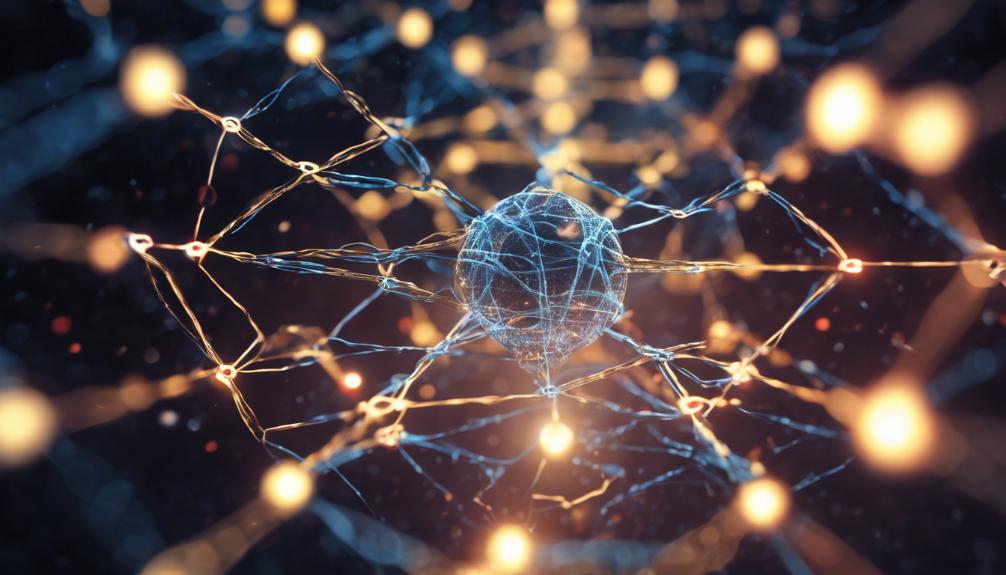
The Quantum Channel Coding Theorem holds profound implications for the advancement of quantum communication technologies, facilitating secure transmission of information through quantum channels.
This theorem also paves the way for the development and improvement of quantum computing applications, leveraging the principles of quantum information theory to transform computational processes.
Quantum Communication Advancements
Quantum communication advancements have opened up new possibilities for the development and implementation of cutting-edge quantum technologies. These advancements have transformed the way information is transmitted and secured in the quantum domain.
Here are three key aspects:
- Quantum Teleportation: Quantum teleportation allows the transfer of quantum information from one location to another without physically moving the particles involved. This phenomenon relies on the principles of quantum entanglement to achieve instantaneous communication, offering exciting prospects for secure data transmission and quantum computing.
- Encryption Methods: Quantum communication offers ultra-secure encryption methods that utilize the principles of quantum mechanics. By encoding information into quantum states, such as the polarization of photons, quantum cryptography provides data security through the detection of eavesdropping attempts, offering an unprecedented level of privacy and confidentiality.
- Particle Entanglement: Particle entanglement lies at the heart of quantum communication, enabling the instantaneous correlation of properties between particles regardless of the distance separating them. This phenomenon forms the basis for secure quantum key distribution protocols and holds promise for future advancements in quantum networks and information processing.
Secure Data Transmission
Building upon the foundations of quantum communication advancements, the domain of secure data transmission in quantum technologies underscores the vital role of encryption protocols in safeguarding information confidentiality and integrity.
Data encryption is a fundamental aspect of secure data transmission, where classical encryption methods face challenges from quantum computing. Quantum key distribution (QKD) offers a solution by leveraging the principles of quantum mechanics to establish secure communication channels. By encoding information into quantum states and using quantum entanglement for key distribution, QKD guarantees data security against eavesdropping attempts.
Additionally, quantum cryptography protocols such as Quantum Secure Direct Communication (QSDC) provide innovative approaches for secure data transmission. These protocols utilize quantum properties to securely transmit information without the need for shared keys, enhancing data security in quantum communication networks.
The integration of advanced encryption techniques into quantum technologies paves the way for robust data security measures, essential for protecting sensitive information in an increasingly digital world.
Quantum Computing Applications
Investigating the computational implications of quantum technologies uncovers a landscape of transformative applications in diverse fields.
Quantum Cryptography:
Quantum technologies offer the promise of secure communication through quantum key distribution protocols, leveraging the principles of quantum mechanics to guarantee unbreakable encryption.
Quantum cryptography provides a means to transmit information with assured security, making it an essential tool for safeguarding sensitive data in an era of increasing cyber threats.
Quantum Teleportation:
Quantum teleportation enables the instantaneous transfer of quantum information between distant locations, a phenomenon that defies classical communication constraints.
By exploiting entanglement and quantum superposition, quantum teleportation holds the potential for ultra-fast data transmission and quantum communication networks with unprecedented capabilities.
Quantum Computing:
Quantum technologies also pave the way for quantum computing, a paradigm-shifting approach to processing information.
Quantum computers harness quantum bits (qubits) to perform calculations at speeds exponentially faster than classical computers, opening doors to solving complex problems in cryptography, optimization, and simulation that were previously insurmountable.
Frequently Asked Questions
How Does the Quantum Channel Coding Theorem Impact Quantum Computing?
Quantum error correction plays an essential role in enhancing the reliability of quantum computing by rectifying errors that inevitably occur during information transmission.
By implementing efficient quantum error correction techniques, such as the quantum channel coding theorem, the information transmission efficiency in quantum computing systems can be greatly improved.
This leads to more reliable and robust quantum computations, paving the way for advancements in quantum technology and its applications.
Can the Quantum Channel Coding Theorem Be Applied to Secure Communication?
In the domain of secure communication, the application of the quantum channel coding theorem holds profound implications.
Quantum encryption, utilizing principles like quantum key distribution, offers unparalleled levels of information security. By harnessing the unique properties of quantum mechanics, such as entanglement and superposition, quantum cryptography guarantees data integrity and confidentiality.
The theorem's ability to advance secure communication exemplifies its significance in advancing the field of cybersecurity.
Are There Practical Limitations to Implementing Quantum Channel Coding?
Implementing quantum channel coding faces significant challenges due to limitations in error correction techniques. These challenges stem from the fragile nature of quantum information, making it susceptible to noise and decoherence.
Error correction limitations in quantum systems pose obstacles in maintaining the integrity of transmitted data. Overcoming these challenges requires innovative strategies to improve fault tolerance and mitigate errors, advancing the practical implementation of quantum channel coding in secure communication systems.
What Advancements in Quantum Technologies Could Benefit From This Theorem?
Advancements in quantum technologies could greatly benefit from the Quantum Channel Coding Theorem. Specifically, developments in quantum cryptography and quantum networking stand to gain from improved quantum error correction techniques enabled by the theorem.
Additionally, leveraging quantum entanglement in conjunction with the theorem could improve the reliability and security of quantum communication systems, paving the way for more robust and efficient quantum information processing protocols.
How Does Quantum Channel Coding Compare to Classical Channel Coding?
Quantum channel coding harnesses quantum principles such as superposition and entanglement to encode and transmit information. This allows for a greater capacity to correct errors and protect data against noise.
Unlike classical channel coding, quantum channel coding can achieve higher levels of security through quantum key distribution protocols, offering a new paradigm for secure communication and information processing.
Conclusion
The quantum channel coding theorem stands as the pinnacle of information theory, showcasing the profound implications of quantum communication protocols and error correction techniques.
It serves as the cornerstone for advancing quantum technologies, offering unprecedented opportunities for secure and efficient information transmission.
The theorem's significance in information processing cannot be overstated, as it transforms our understanding of data transmission in the quantum domain.
Its impact will continue to shape the future of quantum information science in ways beyond our current comprehension.










Rather read than comment?
New explainers land in your inbox instead — and the free 57-page guide arrives straight away. One click to leave, whenever you like.
Sent by QuantumExplainer.com. Confirm by email, unsubscribe in one click, and we never sell or share the address. Privacy policy.