Classical Bits vs Qubits: What Actually Changes

Classical bits against qubits: binary states, superposition, entanglement, gates, measurement and where quantum parallelism does and does not help.
Superconducting circuits, trapped ions, photonics, silicon spins and neutral atoms: the physical machines behind the qubit count, and what limits them.
69 articles
Classical bits against qubits: binary states, superposition, entanglement, gates, measurement and where quantum parallelism does and does not help.

How qubits differ from bits, why superposition and entanglement matter, the difficulty of building stable qubits and why error correction is needed.

A qubit is the basic unit of quantum information. Its states on the Bloch sphere, physical implementations, fragility and the topological approach.

How quantum processors differ from CPUs, why they will work alongside classical hardware rather than replace it, and what that means for education.

A bit holds 0 or 1; a qubit holds a superposition. How the two differ in gates, storage, error behaviour and what that means for computation.

Why quantum computers are unlikely to become desktop PCs: cooling, error rates and cost, and how gate-based machines and annealers are accessed today.

Quantum dots are semiconductor nanocrystals whose color depends on size. Their uses in displays, solar cells, biological imaging, sensing and medicine.

Photonic, NMR and trapped-ion approaches to building a small quantum computer, what the hardware demands, and what a hobbyist can realistically do.
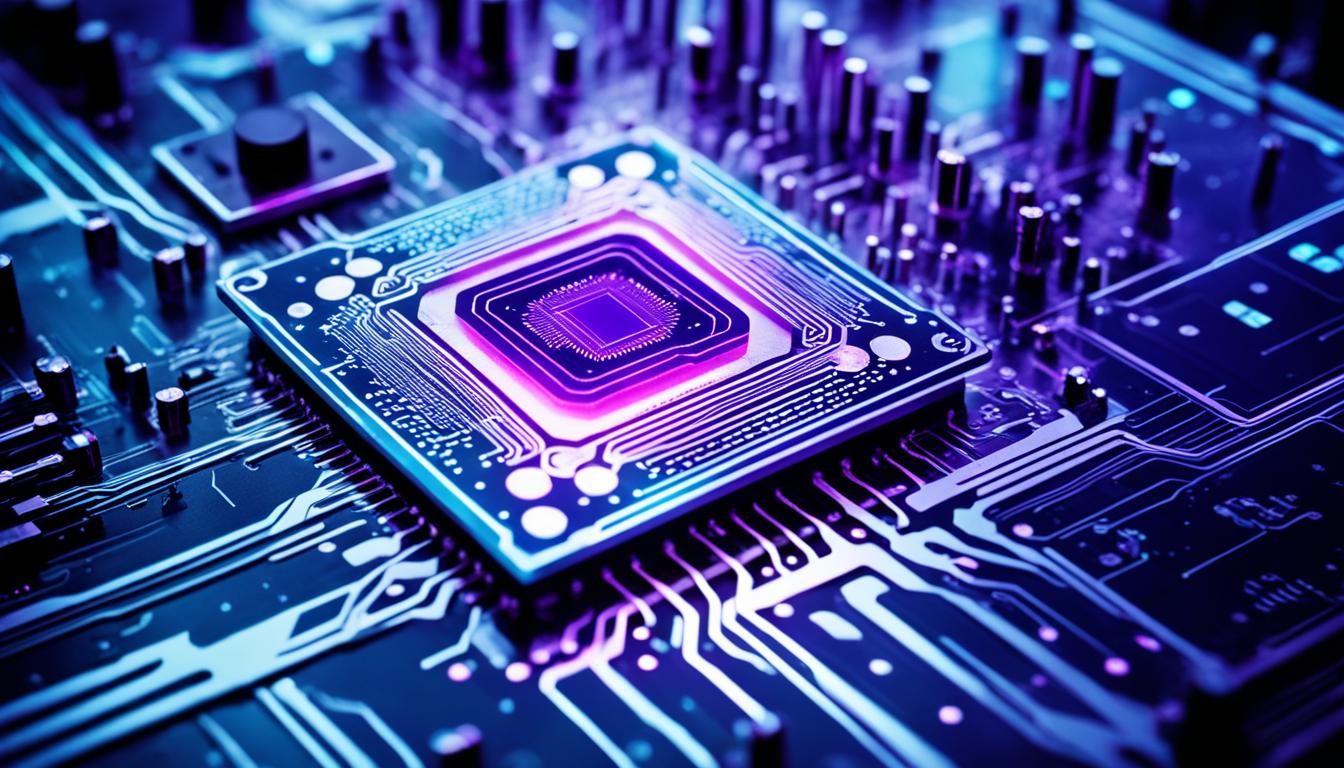
How quantum processor chips are built: qubits, superposition, entanglement, gates and circuits, and the engineering limits that current hardware faces.