Quantum Neural Networks (QNNs): How They Are Built

How quantum neural networks are built from parameterized quantum circuits, how they are trained and where they might be useful.
How quantum neural networks are built from parameterized quantum circuits, how they are trained and where they might be useful.

How quantum phase estimation is used to compute molecular energies, how it compares with VQE and the resources it requires.

Rényi mutual information generalizes mutual information using Rényi entropies. How it is defined for quantum systems and where it is used.

Max-entropy is the partner of min-entropy. Its definition and operational meaning in data compression and quantum information processing.

Quantum causal networks describe how cause and effect work between quantum systems. Their structure, properties and relation to non-locality.

Resource theories treat entanglement, coherence and other quantum properties as scarce resources with allowed operations. Framework and uses.

Decoherence is the loss of quantum behavior through interaction with the environment. Causes, time scales, experiments and mitigation.

What deep learning on quantum hardware looks like today: quantum neural networks, hybrid models, training algorithms and depth limits.
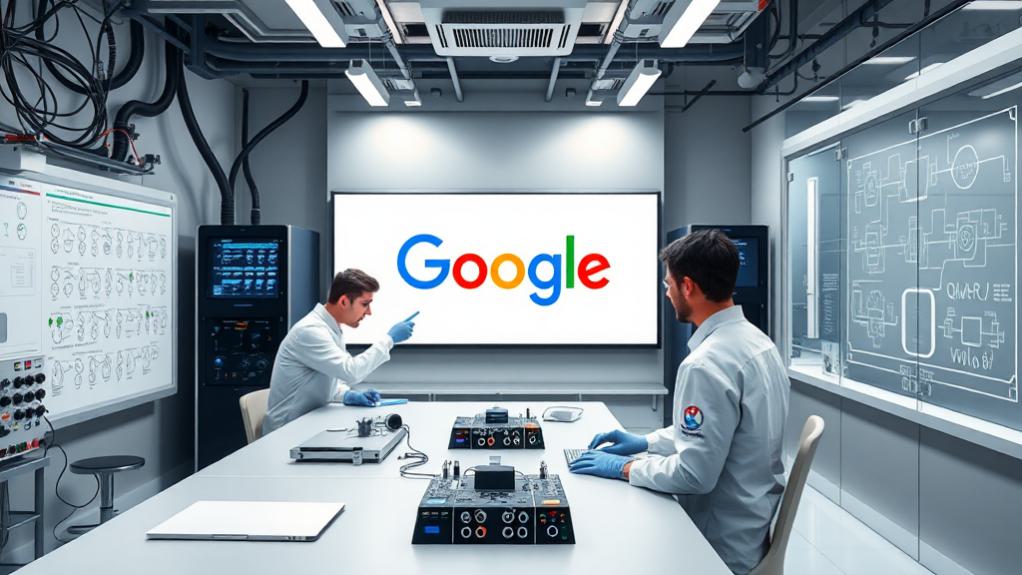
Google’s quantum program: the 2019 Sycamore supremacy result, later processors, error correction milestones and what the claims mean.

The expectation-maximization algorithm fits models with hidden variables. How a quantum version works and what speedup it could offer.

Semi-supervised learning uses a few labeled and many unlabeled examples. How quantum algorithms might be applied to it and the open issues.

Quantum few-shot learning aims to adapt quantum models to new tasks with very little data. Approaches, hardware limits and applications.